

MH NO. 15
Tokugawa’s “Deathbed Adoption”: An Ensemble by the Living and the Dead
Suyan Wang
Perhaps from the cold or extreme illness, a trembling, stiff hand slowly reached out from behind a screen. With the assistance of others, the hand was guided down to press a seal onto a document. On the 25th day of the 11th month in the sixth year of Kansei (1794), government inspector Nakagawa Kanzaburo witnessed this extraordinary event. Private affairs of this kind rarely admitted outside observers, yet we can catch a glimpse of it. Now archived in the Tokyo Metropolitan Archives, the diary documents his interaction with the lord in detail, beginning with a greeting:
(Nakagawa Kanzaburo) proceeded to the sickroom and took a seat outside the folding screen. He offered his greetings to Lord Kinya and informed those present that he was there to witness the seal.
Yet he received only this reply from someone else behind the screen:
In response, Ito Yamashiro-no-kami (Yasutada, a yoriai), who was stationed inside the folding screen, explained that because Lord Kinya was gravely ill, he could not return the greeting, and that since his hands were trembling, he (Ito) would need to steady his hand during the sealing. Hearing this, Nakagawa acknowledged the situation.
The owner of that hand was no ordinary man. Lord Hotta Kinya was a hatamoto—a direct retainer who served the shogun—and a yoriai member, an elite class of high-ranking samurai retainers who often held important political responsibilities. The document he had just sealed was no ordinary paper; it was an adoption file, a familiar yet important ritual of the era: hanmoto mitodoke, or deathbed adoption.
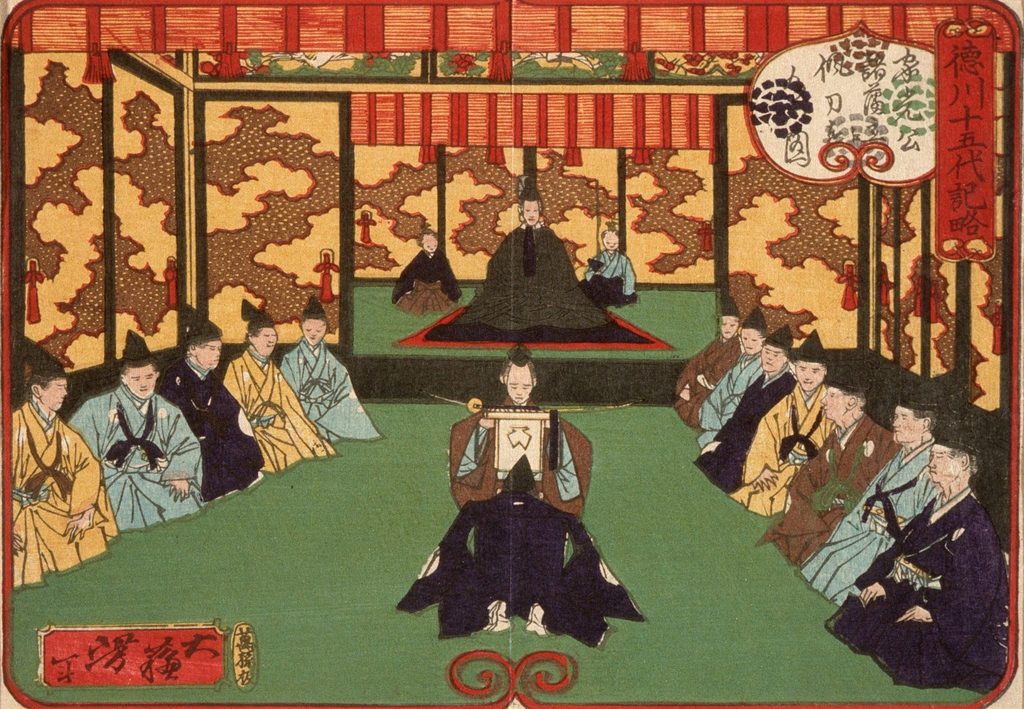
Los Angeles County Museum of Art, Herbert R. Cole Collection (M.84.31.332), www.lacma.org
If these were indeed Lord Hotta Kinya’s final moments, why would a daimyo expend such effort merely to seal an adoption document, and why would a government inspector be present, recording it all in his diary? The answers lie in the nature of Tokugawa governance itself. Known for its rigid legal structure and the shogun’s centralized authority, the Tokugawa period (approximately 1603 to 1868) produced codes such as the Laws for the Military Houses, which set strict rules for civil procedures, including adoption, and placed a strong emphasis on written documentation.
Yet, while these records give every appearance of legal compliance, the stories behind them tell a different reality: that Tokugawa authority, for all its administrative rigor, was sustained as much by civilians’ collective performance and willful discretion. While oral histories recorded years after the fact reveal that such discrepancies existed, Inspector Kanazburo’s record on the deathbed adoption ritual provides rare contemporaneous evidence, documenting the gap between official record and lived reality from within the moment itself. In this article, I will invite readers to step into Lord Kinya’s room with Inspector Kanazburo and observe the unspoken secret behind the screen, one that the written record conceals.
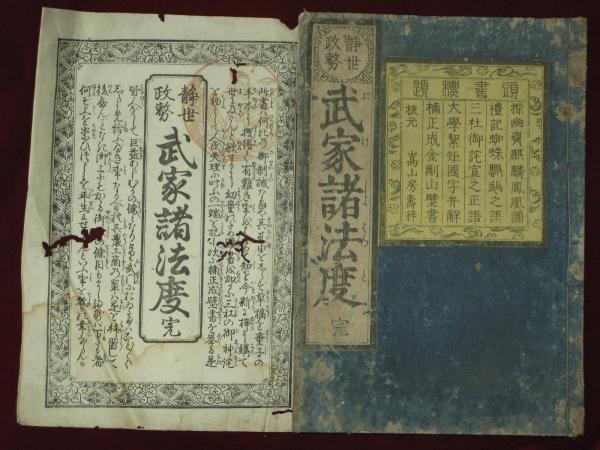
Adoption for the purpose of securing an heir functioned very differently in Tokugawa Japan. Through a carefully regulated system of lineage and succession, the Tokugawa government used its strict controls over adoption as a political tool to preserve the feudal hierarchy. Inheritance lay at the center of many conflicts and disruptions: the head of a house held significant political power and social networks, and a failed or contested succession placed both samurai and commoners at risk of losing economic stability, residence, and social standing. Samurai alliances supporting different heirs often sparked succession disputes, creating instability and even violent conflict. To maintain order, the Tokugawa government established strict procedures governing lineage and inheritance, thereby tightening its control over the domains’ political structure.
At the same time, adoption offered a crucial solution for daimyo who lacked biological heirs and faced the threat of house extinction. Yet this raises the question: what happened when no suitable adoptee could be found before the daimyo’s death? Many daimyo died suddenly, often young, leaving no designated successor. The absence of an heir often led to violence and political turmoil. In the first half of the Tokugawa era, it became the leading cause of attainder, legal death, resulting in sixty-one daimyos being attainted between 1600 and 1650.
Recognizing that heirless houses posed a significant threat to social order, the Tokugawa bakufu, its central government, revised the law and permitted deathbed adoption as an emergency measure in 1651. However, key limitations to deathbed adoption persisted even after such revision. The Tokugawa government mandated that an authorized deathbed adoption could be completed only after an ometsuke (Government Grand Inspector) visited in person to confirm the daimyo was still alive and verify his intent by witnessing him affix his seal to the adoption document. This process of witnessing the sealing is what was called hanmoto mitodoke, or deathbed adoption.
Nakagawa Kanzaburo was one such inspector. His diary records what follows. After receiving the sealed document, he noted:
Nakagawa stated that he had witnessed the seal.
He then urged Lord Kinya to take care of himself and certified the seal’s completion. The adoption process appeared to have been executed perfectly as planned, except for one critical detail: Lord Kinya, the man who supposedly initiated the adoption, never spoke a single word. The following day, Kanzaburo’s family informed him of Lord Kinya’s death.
“What extraordinary timing!” One might observe and lament. Yet, a closer look at Edo-period deathbed adoption patterns reveals something more unsettling: this was not an isolated incident, but part of a broader pattern in which officials routinely “witnessed” seals applied by daimyo relatives, while the daimyo themselves never uttered a word from start to finish. Although the law required a daimyo to be alive at the moment of adoption, it became common practice to describe him as “too ill for his hands to stop trembling.” A folding screen was typically placed in front of the sickbed, making it difficult to confirm whether the person behind it was truly alive or already deceased. In some cases, the lord himself may not have even been in the room at all.
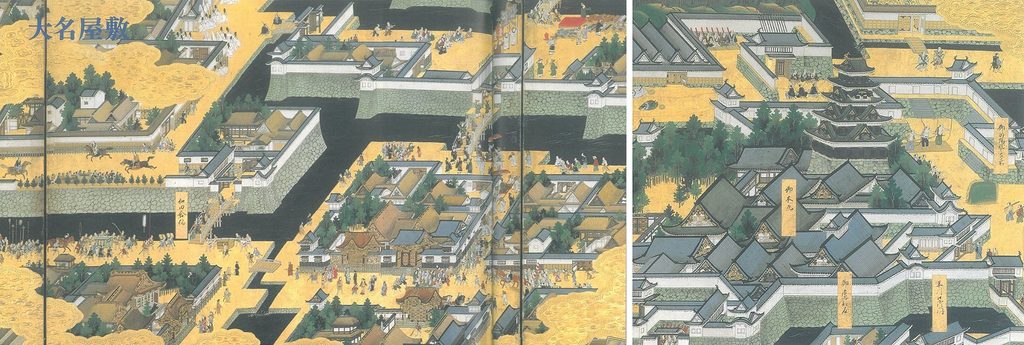
If the inspectors never saw the daimyo himself, nor heard the daimyo speak, how did they certify that the daimyos were alive during these deathbed adoption rituals? The simple answer is—they did not. Another government inspector, Yamaguchi Naoki, discusses this in his interview: “In later days, even if he was already dead and growing cold, a screen would be set up and the dead person laid to rest behind it in such a manner that it appeared he was still alive. We, too, would go with the assumption that he was still alive.” The ritual of deathbed adoption was, in essence, a performance: a collective act carried out by the living attendants who guided the daimyo’s hand to the seal, the inspector who chose to certify without truly confirming, and the deceased daimyo himself, if he was indeed still present in the room. What was plotted behind these performances may be beyond our reach, but stories like this one still offer something valuable: a glimpse into the lived reality official records were never quite designed to show.
While Inspector Kanzaburo’s diary lays out, in plain and measured language, the confirmation of a sealing, the very requirement of an inspector’s presence speaks to the Tokugawa government’s authoritative character. At the same time, inspectors’ willingness to participate in, or quietly overlook, these performances reflects a form of human discretion operating within the rigor of Tokugawa officialdom. The very existence of such collaborative performances suggests an unspoken understanding that Tokugawa control remained, to a meaningful degree, on paper. The gap between that paper and the lived reality behind the screen is precisely what history invites us to explore: to truly hear the voices of the people and their lived reality rather than only reading a written record—to not simply trace the trembling hand that reaches from behind the screen and call it a certified fact.
Original text:
一 (中川勘三郎が)病間へ罷り通り屏風外に着座、錦弥え挨拶に及び、且つ判元
見届くべき段申し達し候ところ、屏風内に詰め居られ候伊東山城守(祐政、寄合)挨拶にて、
大病ゆえ挨拶に及ばず候段、且つ手揮え(ふるえ)候につき添手(そえて)致し候段申し聞かされ候につき、
承知の旨挨拶に及び、願書へ印形調えられ、肝煎へ差し出され、肝煎(寄合肝煎松平内蔵允信愛)より
自分へ相越され候。判元見届け候段、且つ病気快気に候わば願書
願い下げの義目出度く取り次ぐべき段、且つ又病気養生これあり候様に
申し達し、直に書院え罷り出で候、この節一類中には一統入頬(いりかわ)に並び居り
申され候
Translation of the text:
(Nakagawa Kanzaburo) proceeded to the sickroom and took a seat outside the folding screen. He offered his greetings to Lord Kinya and informed those present that he was there to witness the seal.
In response, Ito Yamashiro-no-kami (Yasutada, a yoriai), who was stationed inside the folding screen, explained that because Lord Kinya was gravely ill, he could not return the greeting, and that since his hands were trembling, he (Ito) would need to steady his hand during the sealing. Hearing this, Nakagawa acknowledged the situation.
The petition was then prepared with the seal, passed to the kimoiri (administrator, Yoriai Kimoiri Matsudaira Kurando-no-jo Nobuchika), and from the kimoiri, it was forwarded to Nakagawa.
Nakagawa stated that he had witnessed the seal and added that if Lord Kinya’s condition improved, the petition should be withdrawn. He also instructed them to ensure that proper care and recuperation were provided. After this, he immediately proceeded to the study room.
At that time, it was said that all the relatives were lined up together in the rear quarters.
Translated by DeepL.com. Adoption Judgment Original Appearance Notification Registered Letter 1 (Niimi Documents). Tokugawa Shogunate Series, Niimi Documents Collection. Call no. Niimi-218. Material ID 000108463. Tokyo Metropolitan Archives.
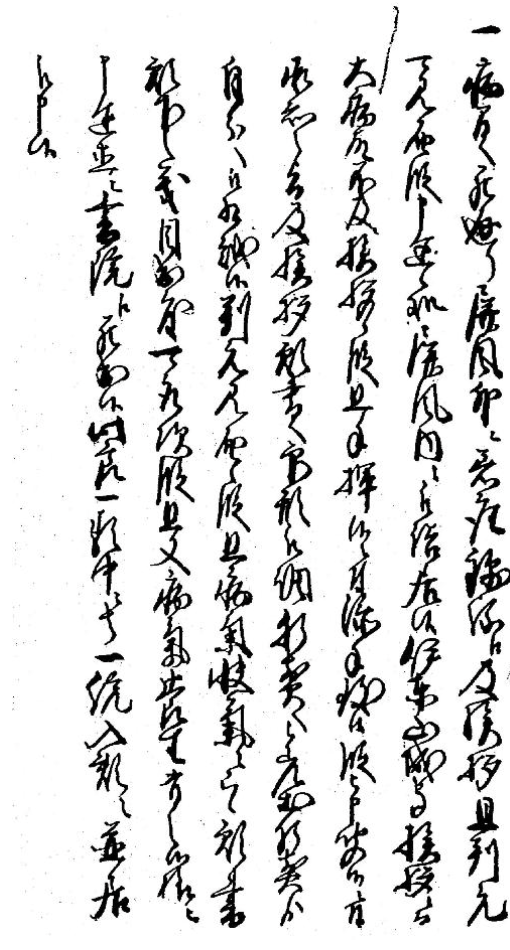
https://dasasp03.i-repository.net/il/meta_pub/G0000002tokyoarchv01_0001084630001.
Author Bio: Suyan Wang is a senior at UC Santa Barbara, double majoring in Sociology and History of Public Policy and Law. Her research interests focus on the sociohistorical effects of globalization on migration, alongside a particular interest in the legal traditions of ancient China and Japan. Suyan is a passionate advocate for the preservation of historical memory and the promotion of intercultural understanding.