“Cowhides, Fire, and Death”: The 1881 Atlanta Washerwoman Strike in the Pages of the Atlanta Constitution
Charlotte Hamilton
In the summer of 1881, Black washerwomen in Atlanta gathered in a church in the Summer Hill district to discuss what they saw as a great disservice within their profession. Discontented with their meager wages for washing, they set strike terms at a consistent rate of one dollar per dozen washes. Within days, the city’s leading newspaper warned of a “sextette of ebony-hued damsels” threatening dissenters with “cowhides, fire, and death.” At the height of the strike efforts, African American domestic workers were cast as inconvenient, aggressive, and unlawful to the public order of the city. Yet behind that rhetoric was one of the most organized labor efforts in the post-Reconstruction South — and the newspaper knew it.
The 1881 Atlanta Washerwoman Strike demonstrated a highly coordinated labor effort by ordinary laundresses in the urban South. These women organized through church and neighborhood networks, leveraged an industry by withholding their work, and challenged municipal authorities and employers to secure fair wages. At a time when Black women lacked formal political rights, their “unskilled” labor was their power. This piece examines how White-controlled media sought to suppress that power in post-Reconstruction Atlanta.
The Atlanta Constitution was no neutral observer. Headed by former Confederate officer Evan P. Howell and his partners, William A. Hemphill and Henry W. Grady, the paper was deeply involved in Atlanta’s municipal government and the “New South” industrial development. Its coverage of the strike built a portrait of the women as illegitimate, infantilized, and criminal — and that was no accident.
From the start, the Constitution framed the laundresses’ labor dispute as unreasonable. The paper reported the strike “caused quite an inconvenience among our citizens,” while simultaneously threatening to raise the washerwomen’s rent, and threats to withdraw charitable support for Black domestic workers during the winter months, painting the striking women as economically selfish rather than economically desperate. Meanwhile, “The New Steam Laundry” article suggested replacing them with a White-owned Steam Laundry staffed by “smart Yankee girls.” By centering the narrative of White household discomfort, the Constitution delegitimized the strike and defined it as a disruption to be solved, not a grievance to be heard.
Beyond delegitimizing the strike, the Constitution also infantilized the Black washerwomen, questioning their ability for rational agency. “The Washing Amazons” claimed “the colored people’s stupidity in not seeing that they are working their own ruin” and predicted that within the week the women would be “bending over their tubs, singing songs as loudly as if they had succeeded.” Insinuations that a “White man” was backing the strike implied that the labor organization could not have originated from Black washerwomen themselves. And in the same breath, the paper feminized them as “ebony-hued damsels” while masculinizing them as the “washing amazons.” This paternalistic, racialized, and gendered language cast these women as emotional, dependent, and incapable of their own political judgment.
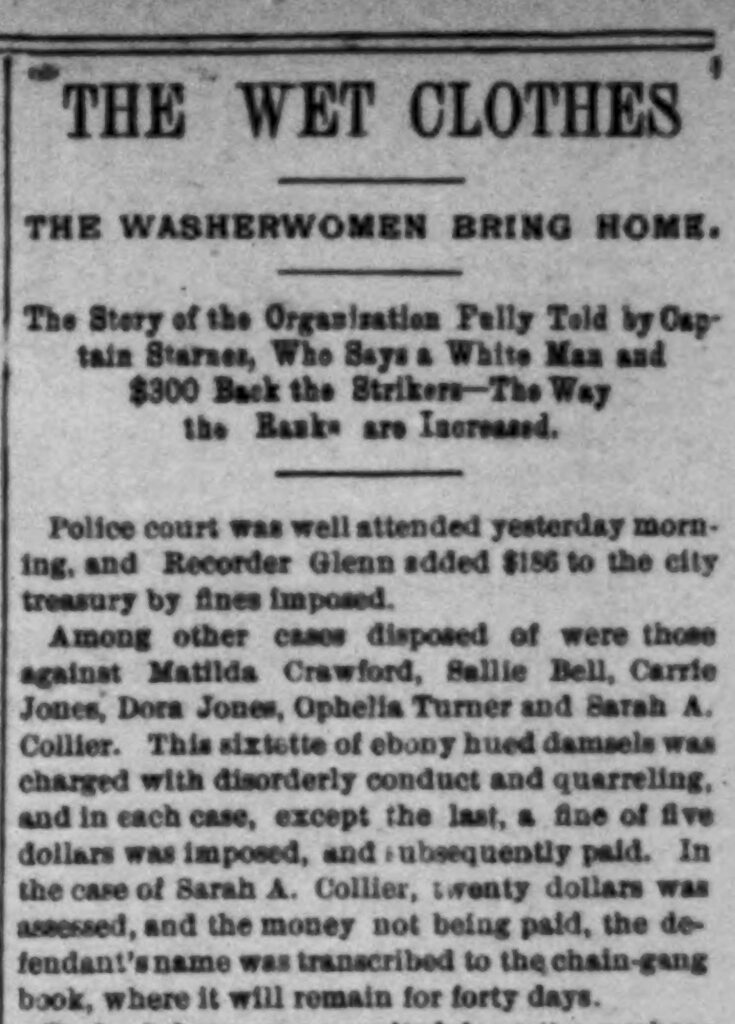
By warning that dissenters suffered threats of “cowhides, fire, and death,” the Constitution escalated the narrative from unreasonable laundress to violent coercer. It detailed a police statement in which three women berated a washerwoman hired as a replacement, and reported the arrests of eight strikers, one of whom was sentenced to the chain gang for forty days. In the article, Police Chief Starnes was quoted as promising he would “get the chain gang full.” By foregrounding arrest, fines, and imprisonment, the Constitution cast the labor dispute as a criminal incident, suggesting that the strike had expanded through coercion rather than collective will.
The evidence tells a different story. These women effectively organized their labor monopoly through church and neighborhood networks, directly challenging those who sought to regulate their labor. While the Constitution portrayed coercion, census data and historical scholarship reveal a highly structured labor movement instead.
Although the New South promised opportunity, it delivered hierarchy. White Southerners built an economic order that confined African Americans to low-paying, “unskilled” labor—work White Southerners did not want to do but certainly benefited from. The numbers reflect this racialized system of labor: by 1880, 96% of African American women in the South earned wages as domestic workers, and by 1880, one in five Black women in Atlanta also worked as washerwomen. This suggests that nearly every household had a washerwoman. Their sheer numbers gave them real leverage in Atlanta’s labor market.
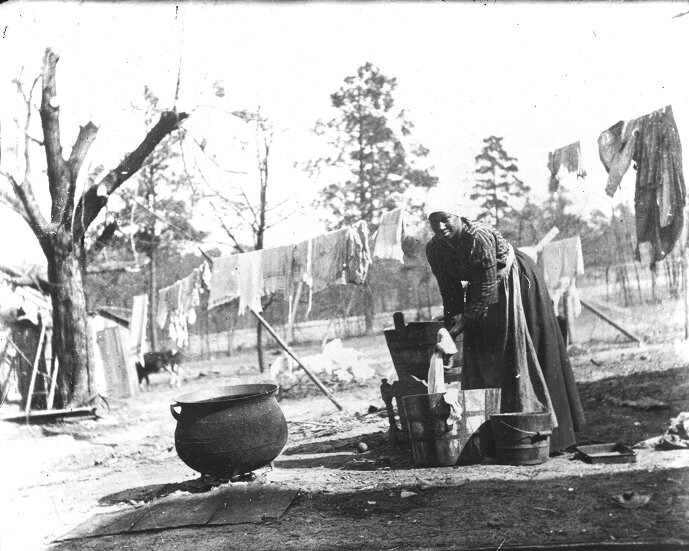
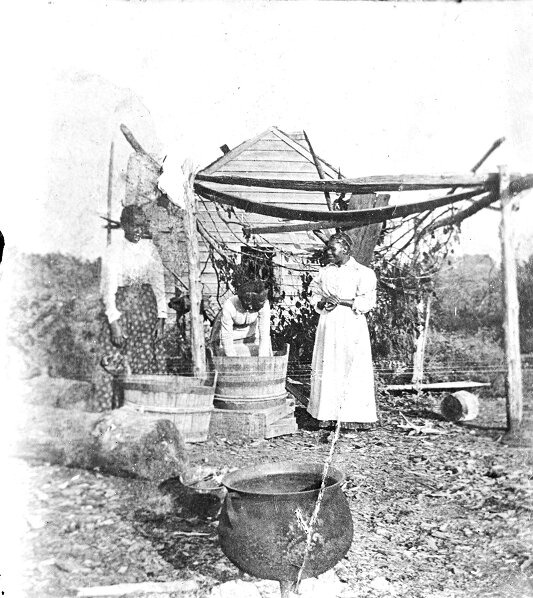
Laundry work also offered Black women significant independence over their labor. Unlike live-in servants, washerwomen worked on a clientele system, set their own hours, supplied their own materials, and labored at home or in their community. But the New South consistently categorized this work as “unskilled,” a label that minimized both the technical and economic knowledge it required. As Tera Hunter notes, the autonomous structure of laundry work made wage standardization not just possible, but inevitable.
Acting on that discontent, African American women mobilized church networks to form the Washing Society Trade Organization in 1881. Beginning at a church in Summer Hill, they established a consistent pay rate of one dollar per dozen and quickly expanded. Chapters opened across all sectors of Atlanta, with formal officers, committees, and subsidiaries. Churches throughout the city provided meeting space, while members hosted large gatherings each night and canvassed for new members during the day. The movement grew from twenty members at Summer Hill to almost three thousand, almost overnight.
Even the Constitution could not ignore the strike’s scale—“The Wet Clothes”—became front page news on July 29, 1881. The following week, the paper published the Washing Society’s own letter to Mayor Mr. Jim English:
We, the members of our society, are determined to stand by our pledge and make extra charges for washing. We have agreed and are willing to pay $25 or $50 for licenses as a protection so that we can control the washing for the city. We can afford to pay these licenses and will do so before we are defeated; this way, we will have full control of the city’s washing at our own prices, just as the city has control of our husbands’ work at their prices. Don’t forget this. We hope to hear from your council Tuesday morning. We mean business this week or there will be no washing.
The letter speaks for itself. These women understood municipal authority, labor leverage, and collective bargaining. And they wanted the Mayor to know it.
The gap between the Constitution‘s portrayal and other historical evidence reveals more than just selective journalism. It exposes the newspaper as a tool for defending an economic and racial hierarchy in post-Reconstruction Atlanta. The 1881 strike did not generate White anxiety so much as reveal it. The New South had long been structured around fears of Black independence and labor control. Its promises of opportunity, innovation, and progress ultimately depended upon keeping Black laborers subordinate.
The Constitution’s response was deliberate. By portraying higher laundry wages as unreasonable, the paper denied Black domestic labor as a legitimate site of wage negotiation, dismissing both the work and the workers. Mocking the washerwomen for striking in “stupidity,” the rhetoric was not merely about laundry prices; it was about restricting Black women from wielding labor power within the Southern economy. And the criminal framing shifted public focus from fair wages to justifiable discipline, casting legal institutions as instruments of racial control.
When the Atlanta Constitution printed “cowhides, fire, and death,” it was doing more than reporting. It was shaping public perception of the strike and strikers. The phrase dramatized Black women as figures of disorder while obscuring one of the most coordinated labor efforts in the post-Reconstruction South. The 1881 washerwoman strike challenges us to reconsider how we assess “unskilled” labor, who assigns that label, and how media representation has always shaped our understanding of who holds power and who does not.
AUTHOR BIO: Charlotte Hamilton is a senior History major and Cultural Anthropology minor at California State University, Long Beach, and a Mellon Mays Undergraduate Research Fellow. Her research explores women’s labor and urban life in the nineteenth century. She also drinks far too much coffee, keeps too many browser tabs open, and spends more time than most thinking about the history of laundry.